Strength Is Not Always Standing Still
A lot of people picture strength as something rigid. They imagine the strongest person in the room as the one who never bends, never changes course, and never admits that the original plan needs work. That version of strength can look impressive for a while, but it can also become a trap.
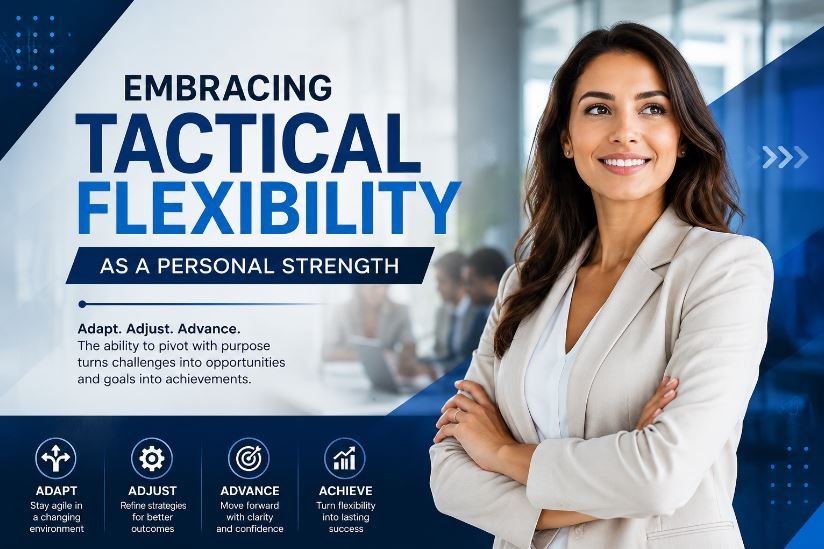
Real strength is not always about holding the same position. Sometimes it is about knowing when to adjust before the pressure breaks you. Tactical flexibility is the ability to stay committed to your larger goal while changing the way you get there. It is not weakness. It is skilled movement.
This matters in practical areas of life, especially when the pressure is financial. If your goal is to rebuild stability, reduce stress, and regain control, then adjusting your approach may be the strongest move available. Exploring options like debt relief can be part of a flexible strategy when the old plan no longer fits the situation.
Flexibility Is Not the Same as Giving Up
Many people resist changing tactics because they think it means quitting. They believe that if they were truly disciplined, they would just push harder. But pushing harder on the wrong strategy does not prove commitment. It only proves resistance to feedback.
Imagine trying to open a locked door by throwing your shoulder into it again and again. Persistence matters, but at some point, it makes sense to check whether there is a key, another entrance, or a better reason to stop forcing that particular door.
Tactical flexibility asks, “What am I actually trying to accomplish?” Once you answer that, you can stop treating one method as sacred. The goal may still matter deeply, but the path can change.
Your Values Stay Firm While Your Methods Move
The most useful kind of flexibility has a center. Without that center, flexibility becomes random. You change direction every time something gets hard, exciting, or uncomfortable. That is not tactical flexibility. That is drift.
Your values are the center. They tell you what should remain true even while your tactics change. If you value health, the workout routine can change, but the commitment to caring for your body remains. If you value financial responsibility, the budget method can change, but the commitment to honest money choices remains. If you value family, your schedule may need adjustment, but your commitment to presence and care stays steady.
The American Psychological Association notes in its resources on resilience and adaptation that people can develop behaviors, thoughts, and actions that help them respond to hardship. That is the heart of tactical flexibility. You are not abandoning who you are. You are learning how to respond more intelligently.
Rigid Persistence Can Become Expensive
There is a hidden cost to staying rigid. You may spend time, money, energy, and attention defending a strategy that is no longer working.
A person may keep following the same financial plan even after their income changes. A team may keep using the same workflow even though everyone is overwhelmed. A parent may keep using the same communication style with a child who has entered a new stage of life. A professional may keep chasing a career path that no longer matches their skills, values, or season.
At first, changing tactics can feel uncomfortable. It may even feel like admitting you were wrong. But there is a difference between being wrong and being ready to update your information. Flexible people are not less committed. They are less attached to being seen as right.
The Best Pivot Happens Mid Process
Tactical flexibility is most powerful when it happens before total collapse. Anyone can change after everything falls apart. The stronger move is noticing early signals and adjusting while there is still room to choose.
Maybe your schedule is becoming unsustainable. Maybe your spending plan is too strict to follow. Maybe your communication style is creating more defensiveness than connection. Maybe your goal is still right, but the timeline is unrealistic.
A flexible person does not wait until the situation explodes. They read the signals. They ask better questions. They make adjustments early.
This is where self awareness becomes practical. You do not need to obsess over every detail of your life, but you do need to notice when the current tactic is creating more friction than progress.
Flexibility Requires Better Questions
When something is not working, the first question is often, “Why am I failing?” That question can lead straight to shame. A more useful question is, “What needs to change about the method?”
Try asking:
What part of this plan is working?
What part keeps breaking down?
What assumption am I still making?
What outcome matters most?
What can change without violating my values?
These questions turn struggle into information. They help you separate the mission from the method. They also make change feel less dramatic. You are not throwing your whole life away. You are refining the tactic.
Adaptation Is a Learnable Skill
Some people seem naturally adaptable, but flexibility is also something you can practice. Start with low stakes areas. Change your morning routine when your schedule shifts. Try a different approach to planning meals. Adjust your budget categories if the old ones are not helping. Practice having a conversation in a calmer tone than usual.
Small adjustments teach your nervous system that change is not always danger. Over time, you become less reactive when bigger changes are needed.
McKinsey’s discussion of adaptive leadership highlights the importance of responding to changing conditions rather than relying only on old playbooks. That lesson applies personally too. Your life is not static, so your tactics cannot be static either.
Tactical Flexibility Protects Long Term Goals
The point of flexibility is not to chase comfort. In fact, tactical flexibility may require difficult choices. You might need to cut expenses, change habits, ask for help, pause a project, learn a new skill, or have an honest conversation.
What makes it flexible is not that it is easy. What makes it flexible is that it fits reality better than the old approach.
Long term goals often fail because people confuse consistency with sameness. They think staying consistent means doing the exact same thing forever. But true consistency is loyalty to the outcome, not loyalty to one routine.
If the goal matters, the method should be allowed to evolve.
Flexibility Helps You Stay Calm Under Pressure
Rigid thinking tends to panic when conditions change. It sees any obstacle as proof that the whole plan is ruined. Flexible thinking creates more options. It says, “This route is blocked, but the destination still matters.”
That shift can lower stress because you are no longer trapped between success and failure. You have more than two choices. You can revise, pause, delegate, simplify, learn, renegotiate, or rebuild.
This does not remove disappointment. Some changes are genuinely hard. But flexibility keeps disappointment from becoming paralysis.
The Strength of the Adjustable Person
Tactical flexibility is a personal strength because it allows you to stay in motion without losing yourself. You can change your thoughts when new evidence appears. You can change your behavior when old habits stop helping. You can change your strategy when circumstances evolve.
That does not make you unreliable. It makes you responsive.
The strongest people are not always the ones who never bend. Often, they are the ones who can bend without breaking their values, adjust without losing their direction, and pivot without abandoning the future they are trying to build.
Embracing tactical flexibility means you are no longer proving strength by enduring bad fit. You are building strength by responding with clarity. You keep your values steady, your goals visible, and your methods open to improvement. That is not giving up. That is how better outcomes are made.
