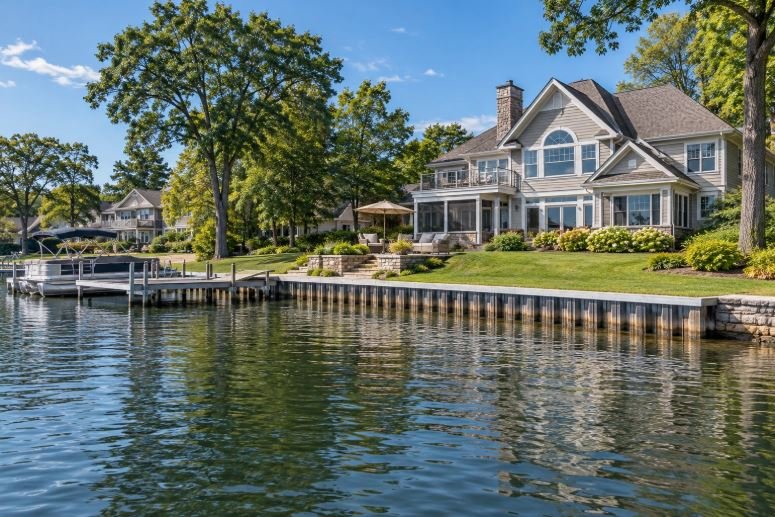
A residential bulkhead has to protect the shoreline without being planned as though every waterfront home faces the same conditions. Shore Protect Team works with private homeowners on lakefront and coastal properties, and its bulkhead service is built around site characteristics such as soil type, water level, wave load, and access.
The company’s residential waterfront services also include docks, piers, walkways, piling, and repair. On a residential property, those existing or planned features can influence how the bulkhead fits into the shoreline and how crews reach the work area.
The first residential decision is the type of water body. Calm freshwater, river frontage, tidal water, and open coastal exposure create different material and reinforcement priorities. The service page connects wood most strongly with calm freshwater, concrete with demanding Gulf Coast exposure, and riprap with active erosion.
Maintenance preference matters more on a home where the owner is responsible for routine care. Wood requires proper maintenance to support the stated 40-50 year service-life expectation, while vinyl is described as requiring no additional care.
The physical lot can be just as important as the material. Limited side-yard access, landscaping, slopes, and existing waterfront improvements can make construction more difficult. The FAQ notes that limited equipment access can increase labor costs.
The bulkhead options for homeowners gives homeowners several systems to consider, but the final choice should be made after the lot, shoreline, water conditions, and maintenance plan are reviewed together.
Start with how the property is used
A residential bulkhead may sit beside a lawn, dock, pier, walkway, or recreation area. Those uses do not automatically determine the wall material, but they affect how the shoreline functions and where construction access is available.
The owner should define what the finished shoreline needs to accomplish: retain soil, control erosion, create a clean edge, work beside other structures, or stabilize a more natural slope.
Match the material to the home and the water body
For calm freshwater, treated wood may provide a practical balance of cost and quality. Vinyl can reduce routine maintenance. Riprap can suit active erosion and wave energy where a natural rock edge is acceptable. Concrete can become more relevant in demanding coastal exposure.
The homeowner’s visual preference matters only after these functional requirements are satisfied.
- Water body – Lake, river, tidal area, or coastal shoreline.
- Exposure – Calm water, currents, waves, or open shoreline conditions.
- Maintenance preference – Routine wood care versus lower-maintenance alternatives.
- Lot access – Space for equipment, materials, and pile installation.
- Existing structures – Docks, piers, walkways, or landscaping that affect the work area.
- Foundation conditions – Soil type, pile depth, anchors, and drainage.
Residential access deserves early attention
Homes often have more restricted access than undeveloped or commercial sites. Landscaping, fences, narrow side yards, and existing amenities can limit equipment movement even when the shoreline itself is easy to reach from the water.
Because access can affect labor by 20-40 percent according to the FAQ, it should be discussed before the owner compares only material prices.
- Define the shoreline problem and the way the household uses the waterfront.
- Measure the proposed bulkhead length.
- Review soil, water level, wave load, and erosion conditions.
- Identify the realistic equipment route to the shoreline.
- Compare materials by maintenance and exposure.
- Include anchors, drainage, and foundation work in the same project scope.
A residential bulkhead should fit the whole property
The best residential solution is not necessarily the least expensive starting material or the strongest possible wall. It is the system that meets the site’s physical demands while fitting the owner’s maintenance expectations, access constraints, and intended shoreline use.
A site-based plan also makes future repair easier to understand. When the original wall, anchors, drainage, and foundation are documented as one system, later maintenance or restoration can be evaluated by component instead of treating every problem as a full replacement.
Residential design should leave room for future waterfront use
A homeowner may plan a bulkhead before adding or replacing a dock, pier, or walkway. The bulkhead decision should not assume those future projects, but the owner can still tell the contractor how the shoreline is expected to be used so the wall does not conflict with known property goals.
This is especially useful when access is limited. If future work is likely, preserving a practical route to the water may be more valuable than maximizing landscaping immediately after bulkhead construction. The exact choice remains property-specific, but the conversation belongs in the planning stage.
Owners should also keep the final project information, including material, repair history, and structural components. A residential wall can remain in service for many years, and a clear record makes later inspection or repair easier to evaluate.
Homeowners should separate shoreline protection from decoration
A bulkhead can improve the visual order of a waterfront property, but its primary purpose is to protect the shoreline from erosion and soil washout. Landscaping, decking, and recreation features should be planned around that structural function rather than used to determine the wall system before soil and water conditions are understood.
Repair history matters on an older residential wall
If previous owners repaired sections or replaced anchors, those changes should be documented when possible. An older wall may contain components of different ages and conditions. A new repair decision is more accurate when the contractor knows which portions were already restored and which remain original.
