Homeowners often discover slow drains or recurring clogs after heavy rain or during periods of rapid tree growth. In many cases, the underlying problem is tree roots that have penetrated underground pipes, leading to blockages and potential pipe damage. Standard drain cleaning methods may provide temporary relief, but when roots are the culprit, a more powerful solution is needed. Hydro jetting tree roots from plumbing lines has become a preferred method for restoring flow and preventing costly repairs. By using specialized equipment that directs high-pressure water through pipes, this technique removes even the most stubborn root masses and residue, restoring proper drainage and extending the life of your plumbing system.
How Tree Roots Invade Residential Plumbing Systems
Tree roots are naturally drawn to moisture and nutrients, making underground sewer and drain pipes a prime target. Over time, even a small crack or loose joint in a pipe can release enough water vapor to attract fine root hairs. These roots enter through the tiny openings, gradually expanding and multiplying as they find a reliable water source. As roots grow thicker, they act like a net, trapping debris and further restricting the flow of wastewater.
Older homes with clay, cast iron, or concrete pipes are especially vulnerable to this type of damage. Pipes made from these materials often develop leaks or breaks at the seams, offering easy entry points for roots. Signs of root intrusion include frequent backups, gurgling noises, and patches of lush vegetation directly above the line. Recognizing these warning signs of root intrusion early can minimize the risk of major plumbing emergencies.
The longer roots remain inside pipes, the greater the risk of complete blockage or pipe collapse. Addressing the issue quickly with targeted solutions is critical for preserving the integrity of your home’s plumbing system.
The Mechanics of Hydro Jetting Technology in Drain Cleaning
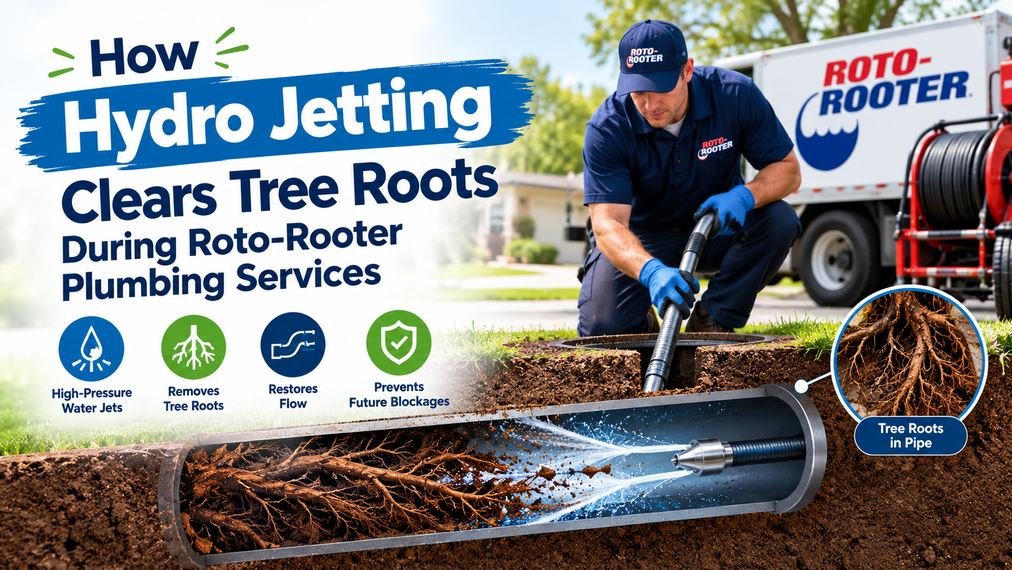
Hydro jetting relies on equipment that sends highly pressurized streams of water—often at 3,000 to 4,000 psi—through a flexible hose fitted with a specialized nozzle. This nozzle is designed to cut through roots, grease, and mineral deposits while simultaneously flushing debris downstream. By rotating or pulsing, the nozzle ensures the entire interior pipe surface is cleaned, not just the immediate blockage.
Unlike mechanical augers or traditional snakes, which may only poke holes through root masses, hydro jetting completely removes organic blockages and scours the pipe walls. This process is particularly effective for hydro jetting tree roots that have created dense tangles or mats inside the line. The method also helps restore the pipe’s original diameter, improving long-term flow and reducing the likelihood of repeat clogs.
Professional services like Roto-Rooter Plumbing Services use truck-mounted hydro jetting machines that can handle residential and commercial pipe sizes. This equipment allows the technician to adjust pressure and nozzle type based on pipe material and the severity of intrusion, ensuring a thorough and safe cleaning process.
Comparing Traditional Snaking With Modern Roto Rooter Services
Mechanical snaking, sometimes called cabling, involves feeding a flexible metal coil into the drain to break up obstructions. While this method can quickly clear minor clogs or soft blockages, it often falls short when faced with extensive root growth. Snaking may temporarily push through the roots, but it rarely removes all organic matter, leaving remnants that can regrow and cause future problems.
Modern Roto Rooter services leverage hydro jetting to address root blockages at their source. By delivering a concentrated blast of water, hydro jetting tree roots is far more effective for complete removal than simply poking through the mass. This comprehensive cleaning also helps prevent the rapid return of roots, since the pipe walls are free from organic debris that would otherwise encourage regrowth.
For homeowners facing recurring root intrusion, understanding the differences between pipe snaking and hydro jetting can influence their choice of service. Hydro jetting is often the recommended option for major root blockages, as it provides a more permanent and reliable result.
Preventing Future Pipe Damage Caused by Stubborn Roots
Once roots have been cleared with hydro jetting, the next priority is preventing them from coming back. One approach is the application of a root-inhibiting chemical that discourages regrowth near the pipe. These treatments are typically applied after a thorough cleaning to ensure direct contact with any remaining fine root hairs.
In some cases, pipe repair or replacement may be necessary if roots have caused significant damage. Trenchless pipe relining, which creates a seamless new interior within the existing pipe, can block future root entry without the need for extensive excavation. Regular inspections using video cameras provide early warning of new root activity, allowing for targeted intervention before full-scale blockages develop.
Homeowners are also encouraged to monitor trees and landscaping near sewer lines and consider root barrier installation if planting new trees. Taking these precautions in conjunction with periodic professional maintenance helps extend the life of the plumbing system and prevents costly repairs down the road.
Conclusion
Scheduling a hydro jetting service promptly after spotting signs of root intrusion can save you from expensive pipe repairs and persistent clogs. If your drains are slow or backing up and you suspect roots are to blame, contact a plumbing professional who specializes in high-pressure cleaning and root removal for a tailored solution.
