The India payment gateways market was valued at around USD 2.06 billion in 2025. According to MarkNtel Advisors, it is projected to reach USD 3.92 billion by 2032, driven by ecommerce adoption and increasing digital payments. This expansion highlights how critical reliable and secure payment gateways have become for businesses aiming to convert visitors into paying customers.
For businesses comparing payment gateways in India, these numbers show how critical payment reliability has become. Customers now expect online payments to work quickly, securely and with minimal effort.
A weak payment experience can affect checkout completion, customer trust and finance operations at the same time. Let’s look at seven things to check before choosing a payment gateway in India.
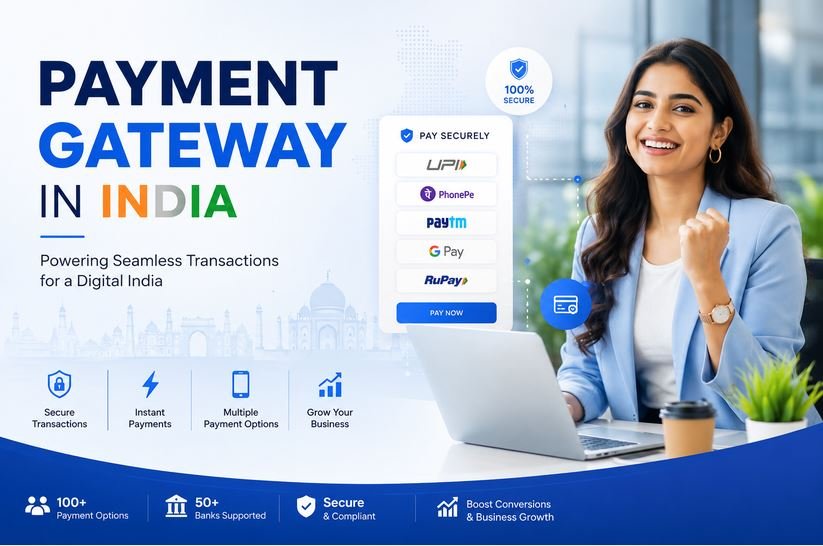
Key factors to check before choosing a payment gateway in India
A payment gateway should be evaluated across payment reliability, customer experience, integration effort, operational visibility and long-term business scale.
- Payment success rate
Payment success rate should be one of the first checks. If customers face repeated failed transactions, they may not return to complete the purchase. A reliable gateway should support smooth payment completion across UPI, cards, wallets and net banking. It should also manage retries and transaction responses clearly.
This matters more during sale periods, app campaigns, product drops and month-end purchase cycles. Even a small failure rate can affect revenue when order volumes are high. For growing businesses, the success rate is not only a technical metric. It directly affects conversion, customer confidence and the final step of the buying journey.
- Supported payment modes
Customers in India use different payment methods depending on transaction value, location and comfort. A small order may happen through UPI, while a larger purchase may move through cards or net banking.
When evaluating payment gateways in India, check the payment modes supported at checkout. The gateway should allow customers to choose from UPI, cards, wallets and other common online options.
A wider payment mix helps businesses serve different customer segments without forcing one payment behaviour. It also reduces checkout hesitation when customers cannot find their preferred option. The goal is simple. Your payment gateway should match how your customers already prefer to pay.
- Checkout experience
A payment gateway should make checkout feel quick, familiar and easy to complete. Long steps, confusing redirects or unclear confirmations can increase drop-offs. Businesses should test the checkout flow on mobile, desktop and app journeys. This is important because many customers complete purchases on mobile devices.
Check how the gateway displays payment options, handles errors and confirms successful transactions. The flow should feel clean from payment selection to order confirmation. A strong checkout experience can help customers complete purchases with greater confidence. It also reduces the load on support teams handling payment-related queries.
- Integration effort
Integration should be simple enough for product and technology teams to manage without long delays. A gateway may look attractive commercially, but poor integration can slow launches.
Check Application Programming Interface (API) documentation, testing support, developer resources, plugin availability and sandbox quality. These details help teams understand how quickly the gateway can go live.
For businesses building advanced payment workflows, API clarity becomes even more important. If AI-assisted operations are part of the roadmap, Model Context Protocol (MCP) server support can also help developers connect payment APIs with AI tools more efficiently. A smooth integration saves time for technology teams and helps businesses launch payment journeys with fewer errors.
- Refund and settlement visibility
Payments continue after checkout. Finance and operations teams also need to track refunds, settlements, failed payments and transaction status.
When comparing payment gateways in India, check the dashboard and reporting depth. Teams should be able to view payment status, refund progress and settlement timelines without manual follow-ups.
This is especially important for businesses with high order volumes or frequent refunds. Clear visibility helps customer support teams respond faster when buyers ask about payment issues. Better settlement tracking also supports cash flow planning. Finance teams can review incoming funds, pending amounts and mismatches with greater clarity.
Choose a payment gateway that supports real business growth
Choosing from the many payment gateways in India requires a practical view of success rate, payment modes, checkout experience, integration, settlements, security and pricing. Each factor affects how customers pay and how teams manage payments after checkout.
Payment gateway solutions like Pine Labs Online can be considered by businesses looking for online payment acceptance with strong payment reliability and operational support. For decision-makers comparing payment gateways in India, it offers a useful reference point for evaluating scale, usability and payment performance.
The right gateway should help customers complete payments smoothly while giving internal teams clearer control over daily payment operations.
