If you have ever spent hours building an email campaign, only to watch your subscriber list shrink instead of grow, you already know the frustration. The problem is rarely your offer — it is visibility. Without knowing exactly where your opt-ins come from, which landing pages convert, and where users quietly walk away, you are essentially flying blind. That is where an opt tracker steps in and changes the game entirely. An opt tracker is a purpose-built tool that monitors, records, and analyzes every opt-in and opt-out action a user takes across your funnels, campaigns, and digital touchpoints. Whether you are a solo creator growing your newsletter or a marketing team managing multi-channel campaigns, understanding how opt trackers work — and how to use them effectively — could be the single most impactful shift in your 2026 marketing strategy.
Key Takeaways
- Opt trackers give you real-time visibility into where subscribers join your list, which sources perform best, and where drop-offs happen in your funnel.
- Compliance and consent tracking is no longer optional — opt trackers help you maintain GDPR, CAN-SPAM, and CCPA records automatically.
- Segmentation becomes sharper when you know the exact origin of each subscriber, allowing for more personalized and higher-converting email sequences.
- Split-testing opt-in forms is far more effective with an opt tracker because you get granular data on which version, placement, or copy drives more sign-ups.
- Churn and unsubscribe patterns revealed by opt trackers allow you to fix broken funnels before they quietly drain your most valuable marketing asset — your list.
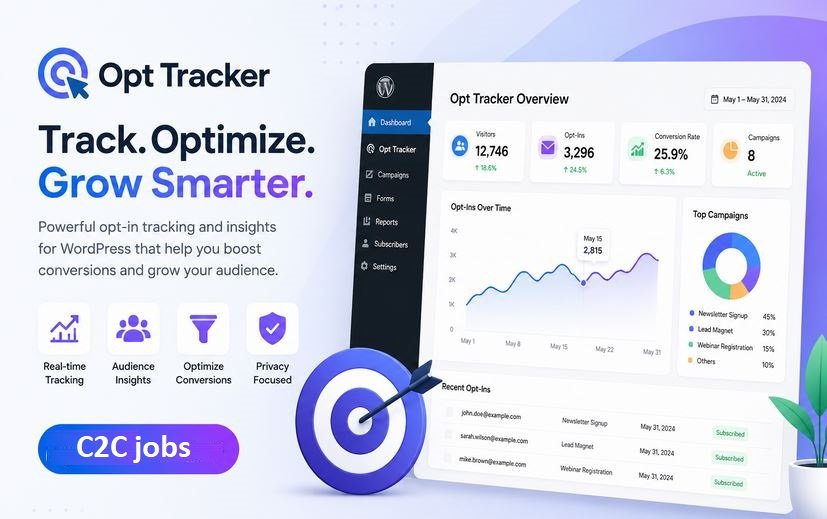
Understanding What an Opt Tracker Actually Does
At its core, an opt tracker records the moment a user submits their information through an opt-in form. But modern opt trackers go well beyond simple data collection. They capture the source URL, referral path, device type, time of day, campaign tag, and even behavioral signals like how long a visitor spent on the page before subscribing.
Think of it as a GPS for your audience’s journey. Instead of knowing only that someone subscribed, you know why they subscribed, where they came from, and what they did right before they hit that submit button.
For example, imagine you are running traffic to three different landing pages — one from Facebook ads, one from a YouTube video, and one from organic search. Without an opt tracker, all three sources dump new subscribers into the same list and you have no idea which source is working. With an opt tracker, you immediately see that 68% of your subscribers come from the YouTube video, 22% from organic search, and only 10% from paid Facebook ads. Now you know where to double down and where to cut spending.
Why Opt Trackers Matter More Than Ever
Digital advertising costs have climbed steadily, and audience attention has become harder and more expensive to earn. This means every subscriber on your list carries real monetary value — and losing them without understanding why is a costly blind spot.
Here is what has shifted in recent years that makes opt tracking more critical than before:
Privacy regulations have tightened. Laws like GDPR in Europe, CAN-SPAM in the United States, and CASL in Canada require businesses to maintain clear records of when and how consent was collected. An opt tracker creates an automatic audit trail that protects you legally and proves compliance during any third-party audit.
Audiences move across more channels. A user might discover you on Instagram, visit your blog, click a link in a podcast show notes section, and then finally subscribe through a pop-up form. Without cross-channel tracking, that entire journey is invisible. Modern opt trackers stitch these touchpoints together using UTM parameters, cookies, and session IDs.
Email deliverability depends on list quality. Internet service providers look at engagement signals when deciding whether your emails land in the inbox or the spam folder. A list full of unengaged, low-quality subscribers tanks your sender reputation. Opt trackers help you identify low-converting sources so you stop growing a bloated, unhealthy list.
Core Features to Look for in a Reliable Opt Tracker
Not every opt tracking tool is built the same. Before committing to one, look for these essential capabilities:
Real-Time Dashboard Reporting You should be able to see opt-in activity as it happens. Real-time US jobs data lets you respond quickly during live campaigns, webinars, or product launches where timing matters.
UTM Parameter Integration Your opt tracker should read and store UTM tags automatically. These small snippets attached to your URLs tell the tracker exactly which campaign, source, and medium drove each subscriber.
Form-Level Tracking Whether you use embedded forms, pop-ups, slide-ins, or multi-step funnels, your tracker should capture data at the individual form level — not just at the page level. This granularity is what makes split testing genuinely useful.
Unsubscribe and Opt-Out Monitoring Tracking opt-ins without tracking opt-outs gives you an incomplete picture. A strong opt tracker shows you unsubscribe rates by source, by campaign, and by time period so you can identify exactly when and where audience trust erodes.
CRM and Email Platform Integration Your opt tracker should connect seamlessly to tools like Mailchimp, ActiveCampaign, HubSpot, ConvertKit, or Klaviyo. The data it collects should flow directly into your email platform for automated tagging and segmentation.
Compliance Logging Look for a tracker that stores timestamp records, IP addresses, and consent language shown at the time of opt-in. This protects you during regulatory audits and builds long-term trust with your audience.
How to Set Up Opt Tracking That Actually Works
Setting up opt tracking correctly from day one saves you weeks of confusion later. Here is a straightforward approach that works regardless of your platform:
Step 1 — Define Your Tracking Goals Before touching any tool, write down exactly what you want to measure. Is it source attribution? Form conversion rates? Unsubscribe patterns? Having clear goals prevents you from drowning in data that does not help you make decisions.
Step 2 — Create a Consistent UTM Naming Convention Agree on a naming system for UTM parameters across your team. For example: utm_source=facebook, utm_medium=paid, utm_campaign=spring_launch. Inconsistent naming is one of the most common reasons tracking data becomes useless.
Step 3 — Install Tracking Pixels or API Connections Most opt tracking tools provide either a JavaScript snippet you embed on your site or a direct API integration with your email platform. Follow the platform’s setup guide carefully — errors at this stage often cause silent data gaps that are hard to diagnose later.
Step 4 — Tag Every Entry Point Every page, form, button, and link that could lead to an opt-in should carry its own tracking tag. Think about pop-ups, exit-intent forms, footer forms, gated content downloads, webinar registrations, and checkout upsells. Missing even one of these creates gaps in your attribution data.
Step 5 — Test Before Going Live Submit a test opt-in through each entry point and verify that the data appears correctly in your dashboard. Check that the source, campaign, and form name are recorded accurately. This takes 20 minutes but prevents weeks of bad data.
Using Opt Tracker Data to Improve Your Funnel
Collecting data is only half the job. The value of an opt tracker shows up in how you act on what it reveals.
Identify Your Best Traffic Sources Sort your opt-in data by source and look at both volume and quality. A source that sends 500 subscribers with a 15% open rate is far less valuable than one that sends 100 subscribers with a 45% open rate. Opt tracking shows you this distinction so you can invest your time and ad budget accordingly.
Fix Leaking Forms If a specific form shows a high page visit count but a low opt-in rate, that form has a conversion problem. It might be the headline, the button color, the placement, or the incentive being offered. With opt tracking, you can run A/B tests on individual forms and measure exact improvement.
Personalize Follow-Up Sequences When you know that a subscriber came from your “social media tips” blog post versus your “email marketing guide,” you can send them different welcome sequences that match their actual interest. This kind of source-based segmentation consistently lifts open rates and reduces early unsubscribes.
Monitor Seasonal Trends Opt trackers build a historical record that reveals seasonal patterns. You might notice that organic search drives strong opt-in volume in January and September while social media traffic spikes during product launches. This insight shapes your content calendar and campaign timing.
Common Mistakes Marketers Make with Opt Tracking
Even with the right tool in place, a few recurring errors prevent marketers from getting the full benefit:
Tracking only the thank-you page instead of the form submission — This approach misses users who submit a form but never reach the confirmation page due to a slow redirect or technical error.
Ignoring mobile data — A significant portion of opt-ins happen on mobile devices. If your tracking setup does not account for mobile sessions separately, you may be misreading your desktop versus mobile performance.
Letting data pile up without reviewing it — Opt tracking dashboards are only useful if someone looks at them. Schedule a weekly or bi-weekly data review so the insights stay actionable rather than becoming a graveyard of ignored numbers.
Over-relying on vanity metrics — Total opt-ins looks like a healthy number until you realize half of them came from a low-quality traffic source with terrible engagement. Always pair volume data with quality signals like open rates, click rates, and list retention.
The Connection Between Opt Tracking and Email Deliverability
There is a direct link between where your subscribers come from and how well your emails perform. Email providers use engagement signals — opens, clicks, replies, and spam complaints — to decide whether your messages deserve inbox placement.
When opt tracking reveals that a particular source generates subscribers who never open your emails, that source is actively damaging your sender reputation. Cleaning or suppressing these segments protects the deliverability of every campaign you send, ensuring your best content reaches the people who actually want it.
FAQs
What is the difference between an opt tracker and a standard email analytics tool?
Standard email analytics tools measure what happens after someone is already on your list — open rates, click rates, bounce rates, and so on. An opt tracker focuses on the moment before that — tracking how, where, and when someone decides to subscribe. It captures the source, the form, the campaign, and the user’s path through your site prior to submission. Together, both tools give you a complete picture, but they serve different stages of the subscriber journey.
Do I need coding skills to set up an opt tracker?
Most modern opt tracking platforms are designed for non-technical users. Setup typically involves copying a JavaScript snippet onto your website (similar to installing Google Analytics) and connecting your email platform through a built-in integration. Many tools also offer WordPress plugins, Shopify apps, or direct integrations with landing page builders like Leadpages or Unbounce that require zero coding knowledge.
Is opt tracking compliant with GDPR and other privacy laws?
Yes, when configured correctly, opt tracking supports compliance rather than undermining it. GDPR and similar regulations actually require businesses to maintain records of when and how consent was obtained. A properly configured opt tracker stores that consent data automatically, including the timestamp, IP address, and the specific consent language the user saw at the time of opt-in. Always consult your legal team to confirm your setup meets regional requirements.
How does opt tracking help reduce my unsubscribe rate?
Opt tracking identifies which traffic sources and which opt-in forms produce subscribers who are most likely to disengage quickly. Once you spot these patterns, you can adjust the messaging on those forms to set clearer expectations, improve the relevance of your welcome sequence for those subscribers, or simply stop prioritizing low-quality traffic sources. Reducing early churn begins with understanding where disengaged subscribers actually come from.
Can opt trackers work across multiple websites or domains?
Yes. Many enterprise-level opt tracking tools support cross-domain tracking, allowing you to follow a user’s journey from a blog on one domain to a landing page on another. This is particularly useful for businesses that run content sites separately from their main product or e-commerce site. Cross-domain tracking typically requires additional setup using shared cookies or server-side tracking methods, but most reputable platforms document this process clearly.
Opt tracking is not a luxury reserved for large marketing teams with deep budgets. It is a practical, accessible discipline that any serious marketer — at any level — can implement to make smarter decisions, protect their sender reputation, stay compliant with privacy laws, and ultimately build a more responsive and valuable subscriber base. Start with one clear goal, track it consistently, and let the data guide every next step.
